
Collagen Benefits
Collagen is something we women talk about a lot. The fear of losing that beautiful support it gives to our skin and body often leads us to spend a lot on supplements and treatments.
It’s no surprise. Collagen plays a big role in keeping the body strong and it’s one of the most important proteins in the body. It provides structure to your skin, joints, bones, and even your digestive system. As you age, your body naturally produces less collagen, which can lead to visible signs of aging and discomfort in your joints.
Many people think that collagen supplementation means only pills, powders, or creams. And honestly, I used to think the same. But because I’m a bit skeptical about supplements, I started looking for something more natural — something I could really trust to replace any powder or capsule.
From maintaining the firmness of your skin and keeping your muscles healthy and active, collagen is essential for staying strong, flexible, and energized.
When collagen levels drop, your skin can start to look dry and develop more wrinkles.
Taking care of your diet — and including collagen-rich foods — may help improve elasticity and reduce signs of aging.
Here’s what collagen actually does — and why it’s useful to include it in your diet or supplement routine.
Joint Support:
Collagen is part of the cartilage that cushions your joints. Adding collagen to your routine may help reduce stiffness and support easier movement, especially as you age or if you experience joint discomfort.
Stronger Hair and Nails:
If your nails break easily or your hair feels weak, collagen can help. It provides the amino acids needed to support healthy growth and structure.
Bone Strength:
Bones need more than just calcium. Collagen is essential for bone flexibility and density. This can be especially helpful for women after menopause, when bone health becomes a bigger concern.
Better Digestion:
Collagen supports the lining of your gut. If you often deal with bloating or discomfort, it might help maintain a healthier digestive system.
Muscle Recovery:
Collagen contains specific amino acids that play a role in muscle repair. It’s useful after exercise or during recovery from injury.
Heart and Circulation:
Collagen also supports blood vessels. Some studies show that it may help maintain their flexibility and reduce the risk of artery stiffness.
In short, collagen is more than a beauty supplement — it supports many areas of your health. Whether you’re looking to improve your skin or reduce joint discomfort, it can be a smart addition to your daily routine.
Healthy collagen levels give your skin that plump, elastic look we all love — with fewer fine lines, less sagging, and added support for hormonal balance. As we age, the body naturally produces less of it, which is why it’s so important to support collagen through food and daily habits.

One of the Best Natural Sources of Collagen
If you’re looking for a simple and natural way to support your collagen levels, beef broth is one of the best options you can include in your diet. It’s made by slowly simmering bones over few hours, which allows collagen, gelatin, and essential nutrients to be gently released into the broth.
Beef Broth doesn’t just warm you up — it also nourishes your skin, joints, and gut from the inside out. Rich in amino acids like glycine and proline, this traditional remedy supports everything from smoother skin to better digestion. And because it’s easy to make at home or find in stores, it’s a convenient way to add extra collagen to your daily meals.
Collagen Recipe
Follow these steps to make sure your beef bone broth turns into a natural gelatin when cooled. The presence of gelatin is proof that this recipe is full of real, nourishing collagen. This is a traditional family recipe, you can definitely trust it!
Ingredients (for 3–4 servings)
• 1.5–2 kg beef shank bones with meat and marrow.
Optional: 1 piece of joint bone (like knuckle or knee), for more gelatin.
• 2 large onions, halved.
• 3–4 garlic cloves, crushed.
• 1 bay leaf.
• 1 tsp whole black pepper.
• Salt, to taste.
• Water — just enough to cover the bones (not too much!)
Instructions:
(to get gelatin texture)
- Boil the bones once for 5–10 minutes in plain water. Then discard the water to clean the bones of impurities.
- Add fresh hot water to the pot, just enough to barely cover the bones (around 3–4 cm above). Don’t use too much water — this is key!
- Add the onions, garlic, bay leaf, pepper, and salt.
- Bring to a gentle boil, then reduce to the lowest heat and cover.
- Simmer for at least 4–5 hours, preferably 6–8 hours if you want stronger gelatin.
(You can even go up to 10–12 hours if you’re not in a rush.) - If water evaporates, add only hot water, and only a little, to keep the broth concentrated.
- After cooking, remove the bones and vegetables.
- Strain the liquid into a container and let it cool completely at room temperature.
- Then, place it in the fridge overnight.
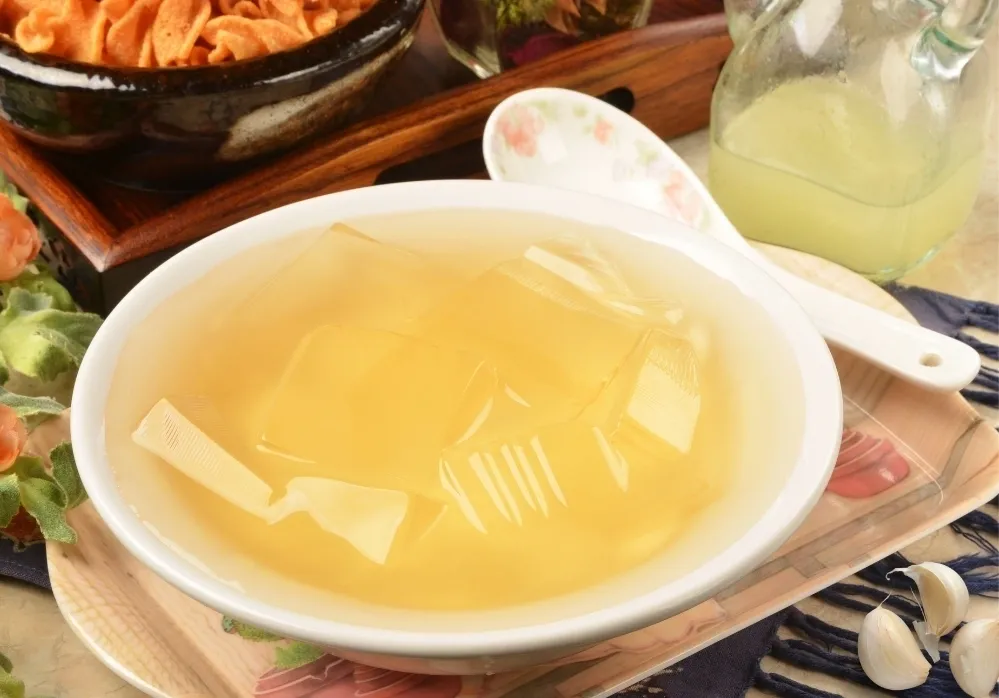
- By the next day, your broth should be gelatinous — thick, wobbly like jelly.
That means you have high collagen content.
Tip:
- If it’s not gelatinous, next time use more marrow bones and joint bones (knees, knuckles).
- Avoid adding too many vegetables or excess water — that waters down the collagen.
If you want collagen-rich broth but want to keep the meat firm:
Remove the meat from the bones after 2–3 hours, while it’s still tender but holds its shape.
Then continue simmering only the bones, marrow, for 4-5 hours to extract the collagen.
If you want to use all the meat in the soup:
Keep in mind that the meat will become very soft and fall apart — but it will add a rich flavor to the broth.
You can use the soft meat for purées, spreads, fillings, or simply eat it as is, tender and comforting.
Optional:
At the end, you can add a bit more garlic if you like a stronger flavuor.
Garlic also contains natural compounds that support collagen production in the body

How to Use Beef Broth in Daily Meals
Beef broth collagen has a rich, savory flavor and a thicker texture. It’s not something most people usually drink on its own, but there are many easy and natural ways to enjoy it throughout your day. Here are some everyday ideas for adding bone broth to your routine:
- Use It in Soups and Stews
Bone broth makes an excellent base for soups, stews, and creamy blends. It brings extra flavor and nutrition, especially when combined with fresh vegetables and herbs. - Cook Grains Like Rice or Quinoa with It
Use bone broth in place of plain water when you cook rice, quinoa, or bulgur. It gives the grains a deeper flavor and more nutrients, making even simple meals feel more satisfying. - Add It to Sauces or Braised Dishes
When preparing sauces or cooking vegetables in a pan, add a few spoonfuls of bone broth. It adds body to the dish while boosting its nutritional value. - Freeze in Portions for Easy Use
If you don’t plan to use it daily, freeze bone broth in small containers or ice cube trays. That way, you can defrost only what you need — ideal for fast cooking or adding flavor to sauces, soups, or grains.
Bonus Tip: Enjoy It Plain
You don’t have to mix it with anything. Just warm up a bowl of broth and enjoy it as it is — simple, salty, and nourishing. It’s a great option when you want something quick, easy, and full of benefits without much prep.
Consistency matters. One cup a day can make a difference over time for your skin, joints, gut, and overall energy. Beauty starts deep inside. After enjoying this delicious broth, why not try a no-sugar dessert too?