Yoga Pose: Jivabalasana
Jivabalasana, also known as the Life Force Pose, is a simple but powerful pose that can easily be included in any “Yoga Benefits” routine. This pose creates a sense of vitality that can be felt throughout the entire body.
It is best practiced when you are in a calm and centered state. From personal experience, I’ve found that during moments of stress or inner tension, the full benefits of this pose are harder to access. Usually I combine this pose with others to feel the full benefits of my yoga practice.
This posture is designed to help connect your inner energy with the physical body. It encourages self-confidence and supports a grounded sense of inner strength.
Practicing Jivabalasana regularly can restore balance between mind and body, offering clarity and a subtle feeling of renewal.
With regular practice, Jivabalasana helps you feel more emotionally balanced and centered. That’s one of the first benefits of yoga: finding emotional stability and connecting with your inner self.
It helps activate the body’s natural energy flow, boosting your personal confidence, and this effect can often be felt from the first session.
To access these deeper benefits, it’s important to approach the pose from a calm and centered state, gently turning your attention inward.
When practiced consistently, Jivabalasana can amplify your magnetic presence and help release stagnant energies, allowing a more balanced and harmonious state to unfold.

In addition to helping balance your inner energy, Jivabalasana offers a range of physical benefits that support overall vitality and wellbeing.
One of its key effects is the improvement of peripheral blood circulation. The posture gently stimulates the cardiovascular system, encouraging better oxygen flow to the extremities and supporting healthy heart function.
With regular practice, this pose also strengthens the joints of the arms and legs. It can gradually ease joint stiffness and discomfort, especially in those dealing with mild forms of joint inflammation or early-stage rheumatism. Over time, the increased mobility and strength can lead to noticeable relief and improved daily comfort.
Postural alignment is another important benefit. Jivabalasana encourages a more upright, grounded physical stance. The body begins to feel more stable and balanced, with an increased sense of firmness and presence.
I encouraged someone with scoliosis to practice this pose regularly, and over time, their posture started to change in a positive way.
As you become more aware of your posture, the spine elongates naturally, the shoulders open, and the entire body moves toward a more symmetrical and proportional form. This not only improves physical appearance but also contributes to a deeper sense of confidence and inner clarity.
How to perform the pose
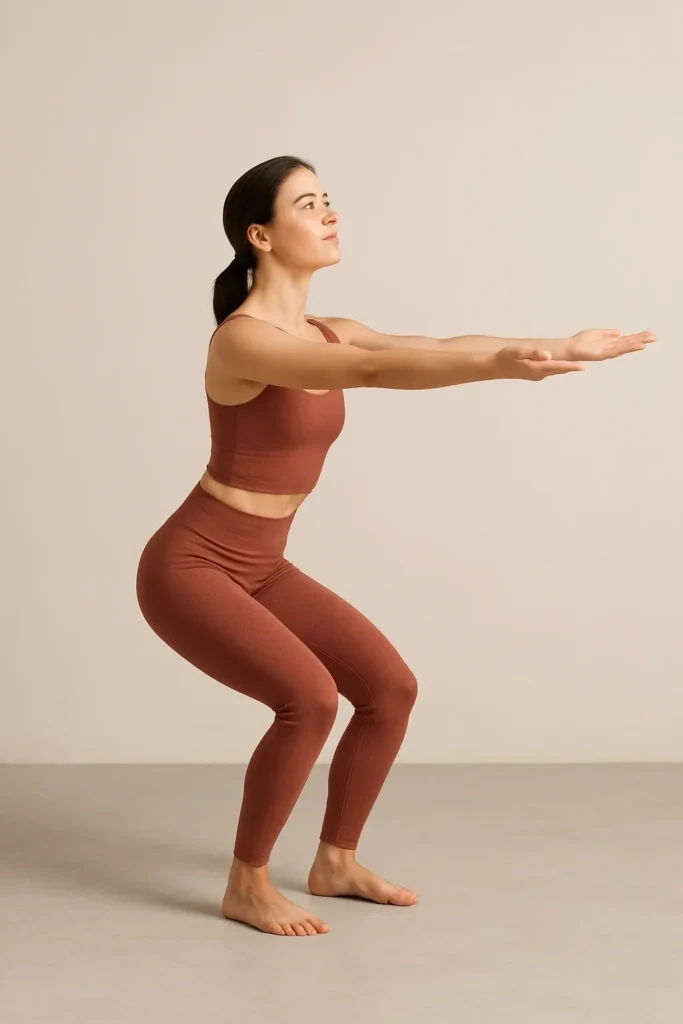
- Stand with your feet parallel and positioned at shoulder-width apart.
- Slightly bend your knees, as if preparing to sit on a chair, and stop the movement when the angle between your thighs and calves reaches approximately 90 degrees.
- Keep your back straight, and align your head with your spine.
- Next, raise your arms and extend them forward so that, in the final position, they are exactly at shoulder level — not higher, not lower. The arms should remain parallel to each other, with palms facing upward and as relaxed as possible. The elbows must be fully extended.
- Remain still in this position for as long as comfortable, breathing naturally, without tensing the abdomen, back muscles, or neck.
One of the most notable effects of the Jivabalasana pose, from the perspective of physical toning and body alignment, lies in the strong activation of energy throughout the limbs—especially the legs and arms.
The pose creates an immediate sensation of vitality in these areas, which then gradually extends throughout the rest of the body. This widespread energizing effect helps awaken dormant energy, offering a refreshing sense of physical and mental renewal.
Practicing Jivabalasana regularly supports the harmonious shaping and definition of the lower body, especially around the thighs, calves, and glutes. It engages the leg muscles in a balanced way, helping to improve both strength and symmetry.
At the same time, the extended arm position builds endurance in the shoulders and arms, contributing to overall muscular tone and balance.
This posture is also particularly helpful in periods of fatigue or low energy. When practiced mindfully, it can support recovery from general weakness and physical exhaustion.
It invites the practitioner to stabilize their posture, activate their inner resources, and reconnect with a calm and steady source of inner power.
For more impact, combine this with Bridge Pose for anti-aging effect. Add Jivabalasana to your daily self-care and feel the results build, slowly and powerfully.